Office Supplies, Ranked
Ranked by how often they do the one thing they were made for.
- Entries
- 10
- Category
- Stuff
- Updated
-
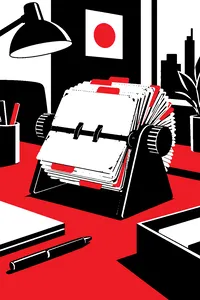
10. The Rolodex
Zephyr American · 1958
Engineer Hildaur Neilsen designed it at Arnold Neustadter's Zephyr American, and it was first marketed in 1958. A spinning wheel of business cards for people you will never call. It ranks for confidence: it still sits beside phones that remember everyone.
-
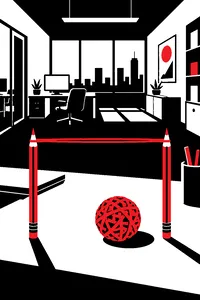
09. The Rubber Band
Stephen Perry · 1845
Patented in England in 1845 by Stephen Perry for holding papers and envelopes. A record rubber band ball from Florida weighs 9,032 pounds and belongs to Ripley's. In offices it is mostly fired across the room, a use not covered in the patent.
-
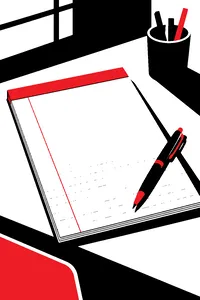
08. The Legal Pad
Thomas W. Holley · 1888
Thomas Holley of Holyoke, Massachusetts, reportedly started it around 1888 by stitching together factory paper scraps, and a judge supposedly asked for the left margin. Lawyers use it for notes. Everyone else uses it to write a grocery list with gravitas.
-
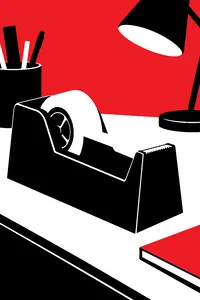
07. Scotch Tape
Richard Drew · 1930
3M's Richard Drew made the clear version in 1930. The name came earlier, from a worker who told Drew to tell his Scotch, meaning cheap, bosses to put more adhesive on his masking tape. The roll's end is always lost and is found by thumbnail.
-

06. The Paper Clip
The Gem clip was being made in Britain by the 1870s and was never patented. Norway credits a local inventor whose design was different and never made, and still built a seven-meter Gem clip near Oslo in 1989. Holds paper fine. Mostly resets routers.
-
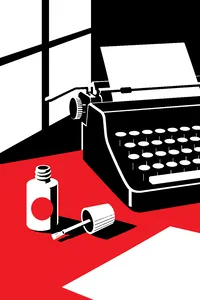
05. Liquid Paper
Bette Nesmith Graham · 1956
Bette Nesmith Graham, a typist, invented it in her kitchen in 1956 and called it Mistake Out. She sold the company to Gillette in 1979 for about $47.5 million. Her son Michael was in the Monkees, the second most impressive thing in the family.
-
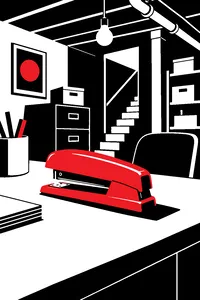
04. The Red Stapler
Swingline · 2002
The one in Office Space was a Swingline 646 painted red for the film, because Swingline didn't make one. Fans asked so often that the company released an official red model in 2002. Staplers rank this high for staying in their lane.
-
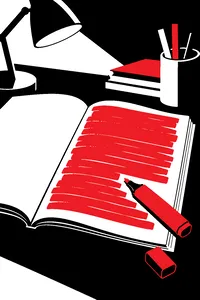
03. The Highlighter
Carter's Ink · 1963
Frank Honn invented it in 1963 and Carter's Ink sold it as the Hi-Liter. Yellow is still the standard because it doesn't leave a shadow on photocopies. Students use it to highlight the entire page, which is technically emphasis.
-
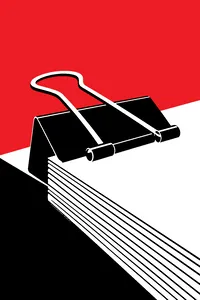
02. The Binder Clip
Louis E. Baltzley · 1910
Louis Baltzley invented it in 1910 so his father, a writer, could hold manuscripts together without sewing them or punching holes. It grips anything, folds flat and doubles as a phone stand and a cable organizer. It asks for no credit.
- Sponsor this list · $49/mo
-
01. The Post-it Note
3M · 1980
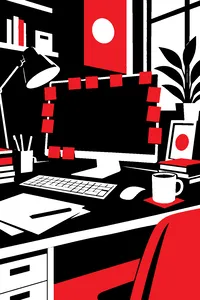
Spencer Silver made a weak adhesive, Art Fry wanted a hymnal bookmark, and 3M launched it nationwide in 1980 after a test flop as Press 'n Peel. The canary yellow came from scrap paper in the lab next door. Still the best idea anyone has stuck to a monitor.
Honorable mentions
-

The Pushpin
A plastic-headed pin that holds a takeout menu to a corkboard for ten years. It comes out easily and is lost easily, which is how one ends up in the carpet waiting for someone in socks. Works great. Also a hazard.
Dishonorable mentions
-
The Staple Remover
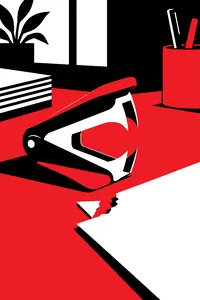
Two pairs of metal fangs that remove a staple by tearing the corner off the page, then biting the hand holding it. Every office has one and everyone uses a fingernail instead. It is the only office supply that looks like it wants to hurt you.
Every list.
On tap.
No newsletter. Point your AI at our public MCP server, or follow the RSS feed. New lists show up in both.