Board Games That End Friendships
Ten boxes that turn a pleasant evening into a grudge with a rulebook.
- Entries
- 10
- Category
- Games
- Updated
-
10. Pandemic
Matt Leacock · 2008
A cooperative game: everyone works together to cure four diseases. In practice one player tells everyone else exactly what to do on their turn, a habit gamers call quarterbacking. It ends no rivalries. It creates one bossy friend and three quiet ones.
-
09. Cosmic Encounter
Eon · 1977
Each player is an alien race with a special power that breaks one of the rules, and every battle invites allies who may or may not show up. Designed by the Eon group in 1977 and in print, on and off, since. It turns your friends into aliens, which is a fair start.
-
08. Twilight Imperium
Christian T. Petersen · 1997
A space empire game from the founder of Fantasy Flight, with a box that weighs as much as a small dog and sessions that commonly run eight hours or more. Betrayal is cheaper here than in most games, because by hour seven nobody can remember what was promised.
-

07. Sorry!
Parker Brothers · 1934
A British take on the ancient game Pachisi, sold in the US by Parker Brothers from 1934. The Sorry card lets you bump an opponent back to start and then say the name of the game at them. An apology delivered as the attack itself.
-
06. Scrabble
Alfred Mosher Butts · 1938
An out-of-work architect invented it during the Depression, counting letter frequency in newspapers to set tile values. Every game since has paused for a dictionary dispute over a two-letter word nobody has ever spoken aloud. QI is legal. Feelings are not.
-
05. So Long Sucker
John Nash, Lloyd Shapley, Mel Hausner and Martin Shubik · 1950
Designed in 1950 by four game theorists, two of whom later won the Nobel in economics. All deals are nonbinding and the rules effectively require betrayal to win. Nash's original title was ruder. Peer-reviewed proof that your friends will sell you out.
-
04. Catan
Klaus Teuber · 1995
Klaus Teuber, a German dental technician, built a game where everyone must trade with everyone, so every turn is a fresh chance to refuse your friend a sheep. The robber exists purely to be placed on someone you love. Over 40 million sold, so far.
-

03. Risk
Albert Lamorisse · 1957
Invented as La Conquête du Monde by the French filmmaker who made The Red Balloon, a gentle film about a boy and a balloon. His other legacy is a cousin holding Australia for three hours. Dice decide everything, and you will still blame the person.
-
02. Diplomacy
Allan B. Calhamer · 1959
Seven players, no dice, no luck, just negotiated alliances and the order sheets that reveal who lied. Games run four to twelve hours. Avalon Hill marketed it as JFK's favorite and Kissinger reportedly liked it too, which is the most honest ad copy ever printed.
- Sponsor this list · $49/mo
-
01. Monopoly
Lizzie Magie / Charles Darrow · 1935
It began as Lizzie Magie's Landlord's Game, patented in 1904 to show how land monopolies ruin everyone. Parker Brothers sold it from 1935 and later paid her $500 for the patent. The lesson stuck: someone hoards the orange properties and nobody speaks until spring.
Honorable mentions
-
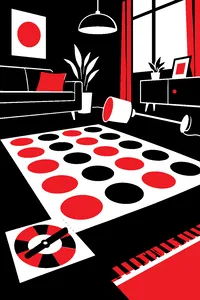
Twister
Milton Bradley · 1966
The first popular American game to use people as the playing pieces. Competitors accused it of selling sex in a box, then Eva Gabor played it with Johnny Carson on The Tonight Show in May 1966 and it sold three million by 1967. Mostly it ended backs, not friendships.
Dishonorable mentions
-
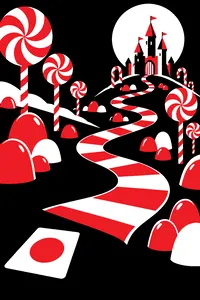
Candy Land
Eleanor Abbott · 1949
Designed by a teacher recovering from polio in 1948, for children who could not yet read. Players never make a single choice, yet a six-year-old who draws the card that sends them back to the start will still look at you like you did it.
Every list.
On tap.
No newsletter. Point your AI at our public MCP server, or follow the RSS feed. New lists show up in both.